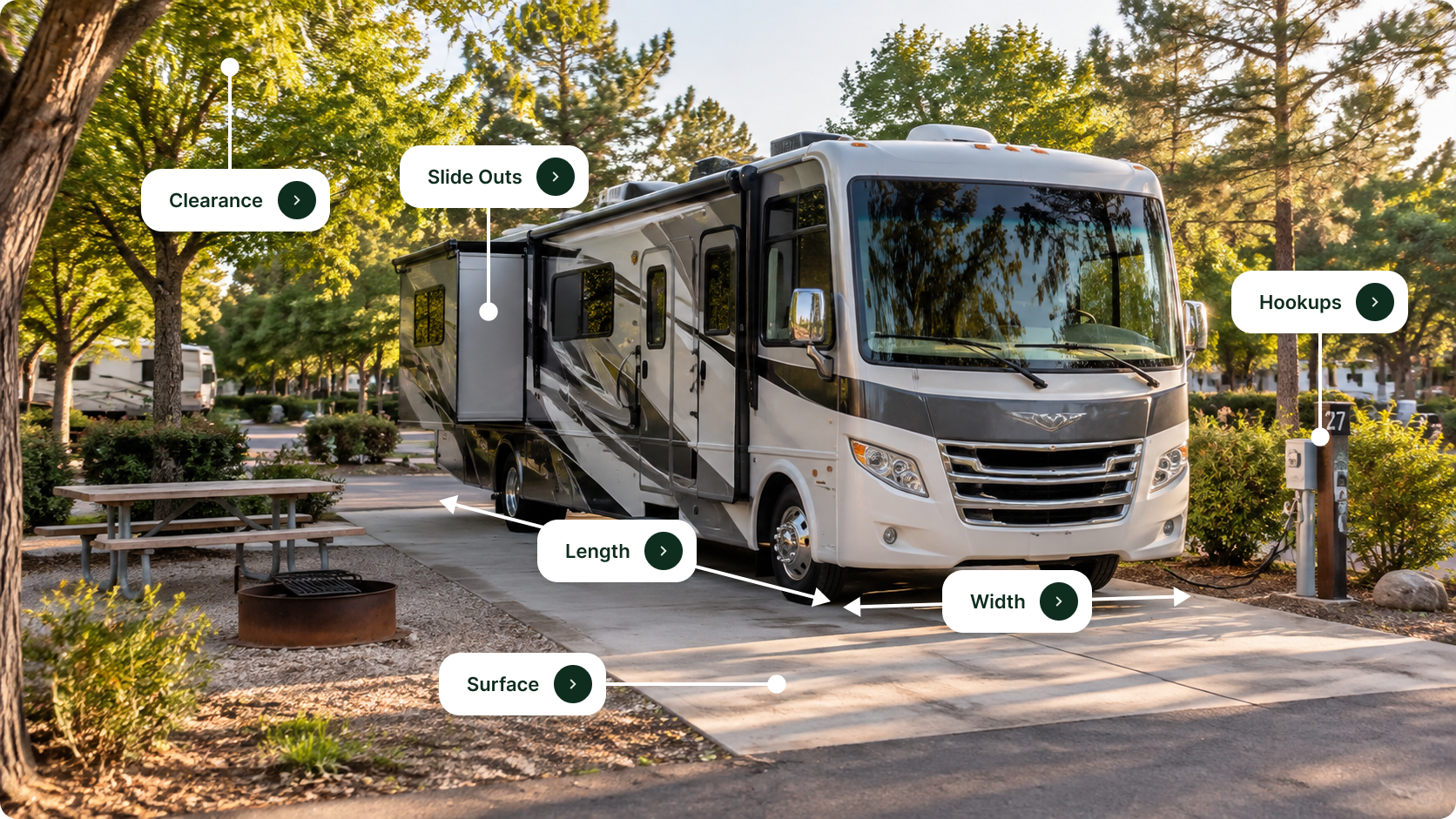
In short: Before you book, check site length, surface, hookups, slide-out clearance by side, leveling needs, park age or condition rules, and whether you can drive to the pad. Pull-through sites let you drive in and out without reversing; back-in sites need room to reverse onto the pad. Compare those details on OutReserve while you are still choosing.
You found the destination and the park looks great, so you book an "RV-friendly" site, arrive after dark, and discover the pad is too short, the ground is soft, or a picnic table sits where your slide-out needs to open. That mismatch is common because "RV-friendly" describes a category, not your setup.
Fit is length, surface, hookups, which sides are clear, leveling tools matched to that surface, and whether you can drive through the campground to the site. This guide shows how to read those details on OutReserve before you book (campgrounds, RV parks, cabins, glamping; not vehicle rentals).
What fit means
A site can sit inside an RV park and still be wrong for your setup, because fit means the pad and surroundings work with your length, slide-outs, tow vehicle, and overnight living space.
Length. "RV-friendly" is a category, not a measurement, so compare the site's stated max length to how you measure your setup:
- Bumper-to-bumper: hitch or bumper tip to rear bumper (travel trailers and many motorhomes).
- Pin-to-bumper: fifth-wheel pin to rear bumper (often shorter than overall tow length).
Match the convention the site uses, because usable pad length is often less than the headline number when utility posts, curves, and tight neighbors shrink what you get. Add a small buffer. "Up to 40 ft" is a park ceiling, not a promise every pad is clear. If you tow a toad, count that length too, or plan a clear place to unhitch overnight.
Surface. Dirt and soft gravel can swallow jack pads after rain, while paved stays firmer but may be crowned or sloped. Gravel is usually workable with blocks, so match your leveling plan to the surface before you arrive. For cabins and glamping, driveway grade and turnaround matter the same way pad length does for an RV site.
Hookups. Full usually means electric + water + sewer. Partial is incomplete (often electric + water). None is dry, so plan tanks and generator rules. "Full hookups" does not mean 50A; larger RVs with multiple ACs often need 50A, which is why you should confirm 30A vs 50A on the listing. Dry camping still needs length, surface, clearance, and access, plus tank and power planning.
Sides / slide-outs. Brochure width is only half the story, because you need to know left, right, or both, and how far the slides extend. A pad that looks "wide enough" still fails when a tree, fence, picnic table, fire ring, or utility post sits on the wrong side. Door-side steps, mats, and an awning need room after you park, so picture the site after everything deploys.
Leveling tools. Pack for the surface:
- Blocks and boards: everyday toolkit for gravel and dirt when you need a few inches of correction.
- Jack pads: so legs do not sink on soft ground after rain.
- Auto-levelers: convenient within their range, not magic. Steep grade or soft dirt can exceed what the system can safely fix, which is why blocks or boards still matter as backup.
If a site looks severely out of level, pick another, because fit includes "can I level this safely."
Age and condition rules. Some RV parks limit RV year or require a tidy exterior, so fit alone is not enough. When a listing notes those rules, treat them as a hard filter.
Access: driving to the site
The pad can be perfect and still be unreachable when the route in is too tight.
Long fifth-wheels and motorhomes need that swing room, and tree tunnels or tight loops cut the margin. Cabins and glamping face the same issue when driveway grade or turnaround will not take your truck or trailer. When you compare sites on OutReserve, read layout and site-type notes with access in mind. Ask whether your full length (including tow vehicle) can navigate campground roads and enter the site without scraping trees or blocking the loop.
Pre-book checklist
- Length: bumper-to-bumper or pin-to-bumper, plus a small buffer.
- Access: drive through the campground to the site (turns, trees, pull-through vs back-in).
- Surface: gravel, paved, or dirt, matched to leveling gear.
- Hookups: full, partial, or none; confirm 30A vs 50A.
- Slide-out clearance by side: left, right, or both; door-side path clear.
- Surroundings: neighbors, trees, picnic tables, fire rings, utility posts.
- Leveling tools: blocks, boards, jack pads, and/or auto-leveler range.
- Generator rules and arrival after dark.
- Park age/condition rules: year or appearance limits. Fit is not enough.
Compare those details across sites on OutReserve, and prefer listings with clear site attributes.
How OutReserve helps
Outdoor stays are different from hotels, because the site (length, surface, hookups, clearance, access) is what matters. OutReserve is built around those attributes, so you can search near your destination and compare what fits before you commit. When inventory is scarce, an availability alert can help you move when something opens.
Compare sites on OutReserve: Search campgrounds and RV parks at OutReserve

Martijn Scheybeler
Founder & CEO OutReserve