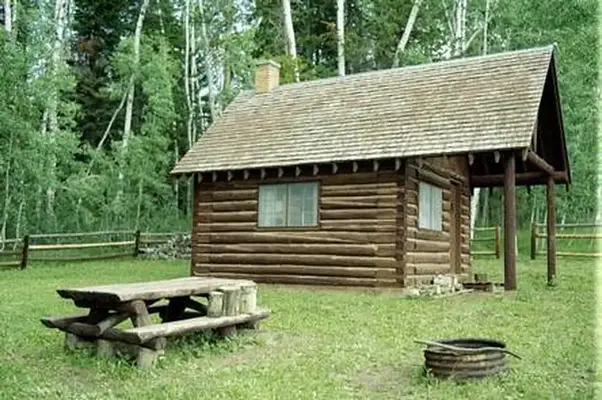
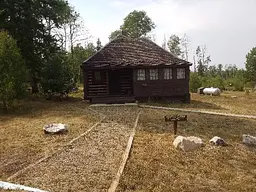
About Jack Creek Guard Station
Seasonal information
2026 Season availability
Campground Amenities
Most popular amenities
 Parking
 Water Hookup
RV Utilities and Hookups
- Water Hookup

Parking and Transport
- Parking

On Site Services
- Propane
Cabin Interior
- Heating


Reviews (6)
What Guests Are Saying
The cabin at Jack Creek Guard Station is clean, with a notably well-maintained vault toilet, and the camp host is friendly and knowledgeable, enhancing the experience. While it offers excellent access to nearby hiking areas, the directions to reach the cabin can be confusing. Some guests noted cleanliness issues and the need for repairs, suggesting it may be overpriced for the condition.
What Guests Are Saying
The cabin at Jack Creek Guard Station is clean, with a notably well-maintained vault toilet, and the camp host is friendly and knowledgeable, enhancing the experience. While it offers excellent access to nearby hiking areas, the directions to reach the cabin can be confusing. Some guests noted cleanliness issues and the need for repairs, suggesting it may be overpriced for the condition.
Review Summary
Mike H
VerifiedAugust 11, 2026 • Stayed at: J01, Loop: JCGS
Cabin was clean, vault toilet was the cleanest I've ever seen. Host was very friendly knowledgeable about the area. I would stay there again.
David B
VerifiedJuly 29, 2026 • Stayed at: J01, Loop: JCGS
It's a small cabin but it was a nice stay. Lots of nearby areas for hiking. The camp host was welcoming but not intrusive. Overall, I was happy with the cabin. One thing, the directions to the cabin are terrible. The cabin is about a mile or so beyond the campground if you're coming from Saratoga. The online directions read as if the cabin is in the same area as the campground, it's not.
Thomas N
VerifiedOctober 17, 2024 • Stayed at: J01, Loop: JCGS
I have stayed at both the lodge and cabin and both could use a lot of repairs. The recent stay at the cabin was quite a disappointment as it was very dirty, thousands of flies, dead mice on floor, trash left inside from previous occupant. Did not use any of the cooking implements because there is no water so how did anyone wash things? This could be a very good thing but I felt it was overpriced for what we got. Turned on the heat stove and it smelled so bad we couldn't leave it on. as it smelled so bad.
Liane T
VerifiedJuly 9, 2024 • Stayed at: J01, Loop: JCGS
Forest Service staff came by soon after we arrived and got the heater going for us. Really nice guys! They said we were the first to use the cabin for the season (hence a winter's worth of floor-dirt and mouse droppings). But we got it swept out as best we could and enjoyed two nights with no further sign of critters. Cabin simple with four bunk beds, table and chairs, stove and heater. Faucet outside for non-potable water and enclosed pit toilet up a walkway. Larger USFS rental cabin uphill -- can and hear its occupants on occasion. Road used by vehicles and ATVs -- not too bad -- but since we were early for the season, it could be busy during the main summer season. All in all, loved the cabin and area. No cell service for T-mobile phones at the cabin. Attempted to fly-fish down at the creek, but hard to get to thru bogs, brush. Ended up using nice open area across from the campground to the north.
Anne D
VerifiedSeptember 17, 2023 • Stayed at: J01, Loop: JCGS
Jack Creek Guard Station is a rustic cabin with a 4-burner propane stove/oven, propane heater, kitchen table, and bunks. It also comes with a healthy population of flies and mice. Outside is fresh water access and a vault toilet. I don’t mind rough or rustic accommodations, but have a hard time justifying $50/ night to have mice scamper over my body while I try to sleep. The guard station could be much improved with a bear and mouse proof storage container for food.
Robert B
VerifiedJuly 25, 2023 • Stayed at: J01, Loop: JCGS
Nice little cabin very comfortable will do again also had family at the bigger cabin above was also nice but it does need some work done with plumbing and other issues in cabin if looking at it
Location & Directions for Jack Creek Guard Station
P.O. Box 249 , 2171 S. Highway 130, Saratoga, WY 82331 United States
Elevation: 2,576 ft
Policies & Rules
General
- Cell phone coverage in the area is unreliable.
- Instructions for lighting the propane stove and lights are inside the cabin; guests need to open the propane tank valve to use and close it upon departure.
- No pets are allowed within the cabin; pets must be cleaned up after outside.
- No saddle or pack animals are allowed at this facility.
- Additional campers, trailers or tents cannot be set up at this facility.
- Guests need to provide their own food, sleeping bags, pillows, flashlights, towels, dish soap, matches, first aid kit, toilet paper and garbage bags.
- All trash and food must be packed out.
- Guests are expected to clean the cabin before leaving.
- Don't Move Firewood: Prevent the spread of tree-killing organisms by obtaining firewood at or near your destination and burning it on-site. For more information visit dontmovefirewood.org.
- Check the elements -What is in the skies? Check the weather report before you leave home. When you arrive at the site, keep on eye on the skies for changes and, if possible, carry a compact weather radio. In inclement weather, take shelter until the bad weather passes. Stay dry - wet clothes contribute to heat loss. Also, keep sleeping bags and important gear dry at all times. -Are there forest or grassland alerts? Forest and grassland home pages post alerts you should know before you go. Many of our forests and grasslands also post alerts on Twitter. The latest fire information may be found on InciWeb. Survey your surroundings -Arrive early. Plan your trip so that you arrive at your actual campsite with enough daylight to check over the entire site and safely set up camp. -Check for potential hazards. Be sure to check the site thoroughly for glass, sharp objects, branches, large ant beds, poison ivy, bees, and hazardous terrain. -Avoid areas of natural hazards. Check the contour of the land and look for potential trouble spots due to rain or snow. Areas that could flood or become extremely muddy can pose a problem. -Inspect the site. Look for a level site with enough room to spread out all your gear. A site that has trees or shrubs on the side of prevailing winds will help block strong, unexpected gusts. -Pitch your tent in a safe spot. Make sure your tent is made of flame-retardant fabric, and keep it a safe distance away from campfires. Keep insects out of your tent by closing the entrance quickly when entering or leaving. -Build fires in a safe area. Your open fires and fuel-burning appliances must be far enough away from the tent to prevent ignition from sparks, flames, and heat. Never use a flame or any other heating device inside a tent. Check to know whether there are fire restrictions in place before starting a campfire. You could be fined if you start a fire in a restricted area. Be fire safe -Keep fires small and bring firewood purchased in the local area. Firewood brought from another area could also bring invasive pests. -If you have to collect firewood at your campsite, collect dead and down wood only. -Check at the local ranger station for current fire restrictions, which can change on a daily, sometimes hourly, basis. -Use existing fire rings. Scrape away litter and any other burnable material within a 10-foot-diameter surrounding the ring. -Make sure all wood fits inside the fire ring. Do not feed a large log into the fire ring. -Have a shovel, axe, and bucket of water available before lighting your campfire. -Never leave a campfire unattended, even for a few minutes or even if there are no flames present. Many wildfires start because of abandoned fires or because someone thought a fire was out. -Put out a campfire by slowly pouring water onto the fire and stirring with a shovel. Continue adding and stirring until all material is cool to touch. -Do not bury your fire. The coals can smolder and re-ignite. Be bear aware Being outdoors means being with wildlife. Many people never encounter a bear. But if you do, here's some simple advice: DO NOT RUN. *Remain calm. *Group together and pick up small children. *Continue to face the bear and back away slowly, talking calmly to identify yourself as a human. *If the bear continues to approach, try to scare it away by making yourself as large and imposing as possible by stretching your arms overhead and making loud noises. *Carry and know how to use bear spray, which is available at many outdoor retailers and can be used to deter a charging bear. Food Storage Bears are always searching for food. Bears are curious, intelligent animals that have great memories. Their eyesight is similar to humans and their sense of smell is seven times more powerful than a blood hound’s, enabling them to smell food from miles away. Those are the very traits that can sometimes get them – and us – into trouble. Most bears are wary of humans and try to avoid them. However, bears can learn to associate people with food and be tenacious in their pursuit of something to eat. Even if humans are around. Everyone in bear country must do our part to store food and other attractants in bear-resistant containers at all times, and dispose of trash in bear-resistant dumpsters.
Nearby Campgrounds

Nearby destinations
Last updated: October 18, 2026

Need help?
Our team is here to help you find the perfect spot for your next adventure.
Replies within minutes
From our Travel Guides