In short: Dry everything completely before it goes away. Store your tent and sleeping bag loose instead of in their stuff sacks, keep self-inflating pads flat with the valve open, deal with leftover fuel, propane and batteries, and put it all somewhere cool and dry.
The first night home decides what your gear looks like when you open it again. A tent packed wet and forgotten can come out next spring smelling of mildew, and a sleeping bag left in its stuff sack all winter loses some of the loft that keeps you warm. For example, MSR's tent manual warns that storing a wet tent for as little as 24 hours in warm weather is likely to start mildew, and that mildew stains are permanent. If you are packing up for the off-season this month, here is how to handle each part of your kit.
Start with a full unpack the day you get home
The sooner everything comes out of the car, the less time moisture has to work. Open every bag, shake out the sand, unzip the doors, and spread things out where they can breathe. Why? Grit works a little like sandpaper on fabrics, while sweat and body oils feed bacteria, mold, and mildew. As you unpack, sort into three piles: things that only need to dry, things that need a wash, and things that hold fuel or batteries.
Tents: dry first, then clean, then store loose
Drying
Your tent must be 100 percent dry before you store it, and no tent-care rule is more important. Pitch it indoors or in a shaded spot outside, or drape the body and fly over chairs if you are short on room. Even when it looks dry, turn it inside out after a day or two so every corner dries. Big Agnes adds a caution: avoid long stretches of direct sun, because UV breaks down coatings and fabric.
Cleaning
Clean your tent when it is dirty or smelly, or after a trip with sand, dust, or tree sap. Use cold or lukewarm water, a non-abrasive sponge, and a non-detergent soap or tent wash. Tent makers agree: never machine wash or machine dry a tent, and skip bleach, dish soap, and spot removers, which can damage the waterproof coatings. For dried sap, REI suggests mineral oil or an alcohol-based wipe, then a good rinse. If your zippers stick, an old toothbrush and mildly soapy water will clear the grit from the teeth.
Mildew and a flaking coating
For a musty smell, use an enzyme cleaner made for gear, exactly as directed, because soaking too long can cause hydrolysis, where water breaks down the polyurethane coating. If the coating is flaking off the inside of the rainfly or the floor, REI's fix is to lay the fabric flat, gently scrub off the flakes with rubbing alcohol and an abrasive sponge, apply a thin coat of tent sealant that matches your fabric, and let it dry for at least 24 hours before packing. A tent that has turned flaky, tacky, or smelly may need serious repair or replacement.
Storing
The stuff sack is great on the trail but a poor choice for months on a shelf. Store the tent loosely in a large breathable bag or an old pillowcase, and store poles partially assembled or broken down from the middle to ease tension on the shock cord. Over a long off-season, lay the tent out now and then: tent makers suggest every three to six months.
Sleeping bags: air out, wash only when needed, never store compressed
Unzip your bag at home and let it air out until it is completely dry. Spot clean the hood and collar, where skin oils collect, with a little non-detergent soap and a toothbrush. A full wash makes sense when the bag looks grimy or has lost loft, and the end of the season is a good time for it. Follow the label: a front-loading washer, a wash made for down or synthetic fill, and a low-heat dry, with two or three clean tennis balls for down. Never dry clean it, and avoid top-loaders with an agitator.
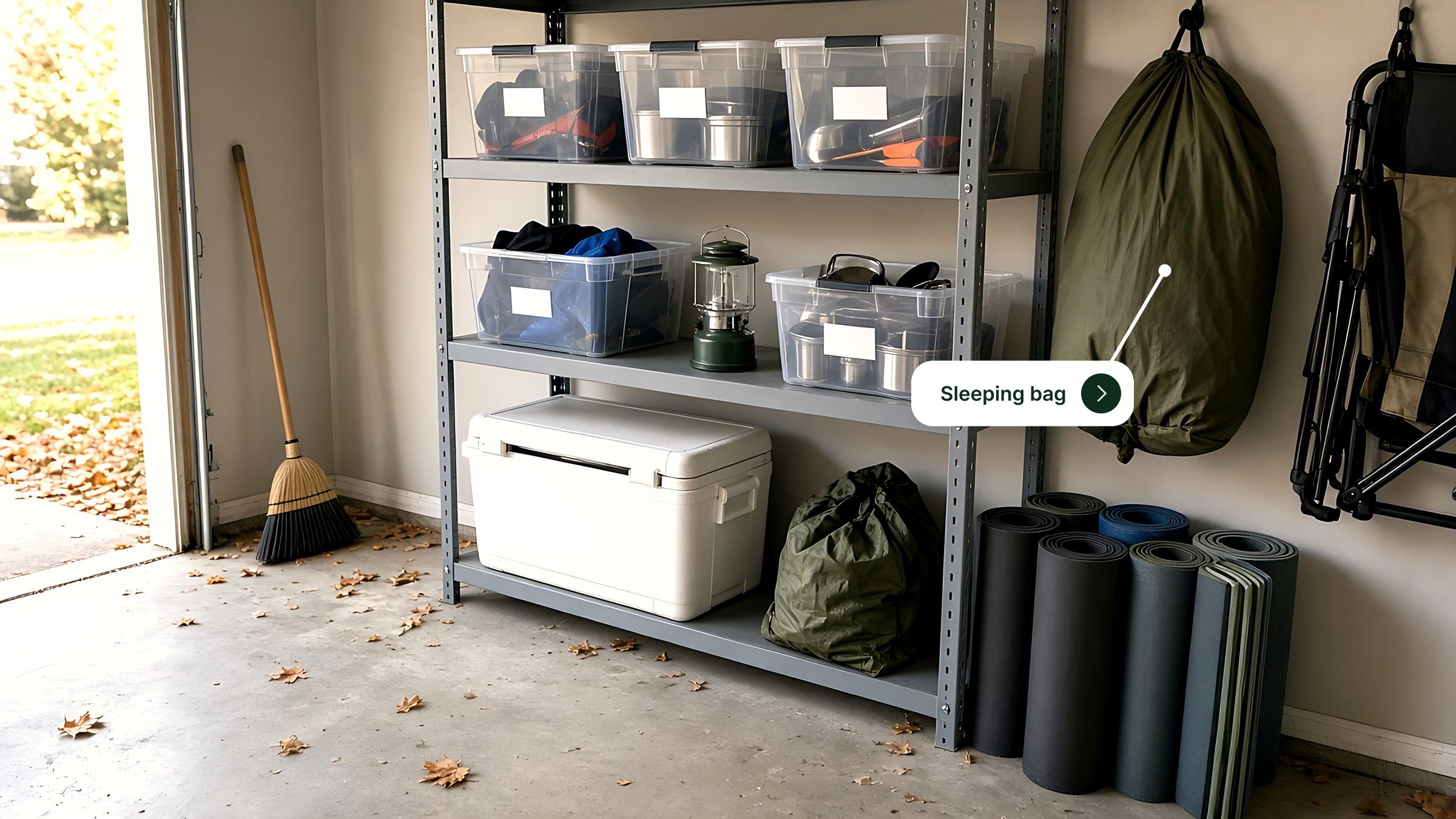
For storage, use the large cotton or mesh sack most bags come with, or a breathable sack around 90 liters, and skip watertight bags, which can trap condensation. Campers on r/camping argue about hanging versus a storage sack, and both work. NEMO says bags do well hung or in a loose mesh bag, while the top reply in that thread pointed out that a hanger can let down bunch at the bottom. What matters is that the bag is dry and not compressed.
Sleeping pads: self-inflating and air pads store differently
Self-inflating pads have a foam core that needs room to expand, so Therm-a-Rest recommends storing them unrolled with the valve open, under a bed or behind a couch. For air pads, keep the valve open and follow your pad maker: Therm-a-Rest says roll them in the stuff sack, while NEMO says store them outside it, flat or loosely rolled. Breath carries moisture inside, so hang pads valve-side down with the valves open to dry. Clean with mild soap and the valves closed, never in a washing machine.
Stoves, fuel, and lanterns
Camp stoves
Wipe your stove with warm, soapy water and dry it. If you hose off a two-burner stove, Coleman says to turn it upside down so no water sits in the manifold and causes rust. On a canister stove, check the pot supports, the gasket where it meets the canister, and the burner ports. Storing stoves and lanterns in a plastic bag closed with a twist tie keeps spiders and insects out of the fuel and air passages.
Leftover fuel
- Liquid fuel stoves and lanterns: pour as much fuel as possible back into the can, because fuel left in the tank can leave a lacquer buildup. Opened white gas degrades, so smaller containers make sense if you camp only a few times a year.
- Isobutane canisters: no need to empty them. MSR says to store them upright in a cool, dry, ventilated spot below 120°F, away from cars, attics, and heaters, and to label partly used ones. Check them for rust, dents, or valve damage before your next trip.
- 1 lb propane cylinders: keep them outside, upright, with the valve closed, and never store them in a garage, basement, shed, or tent, even when they seem empty (Propane Education & Research Council).
Coolers: clean, dry with the lid open, store it cracked
Wash your cooler with mild soap and warm water after every trip, corners and drain included. For stubborn odors, YETI recommends a 6:1 mix of water and bleach scrubbed in with a brush, and baking soda helps with stains. Dry it completely with the lid open, then store it with the lid slightly open, in a dry, shaded spot off hot concrete.
Headlamps, lanterns, and batteries
Energizer recommends removing batteries from devices you will not use for a while and storing them somewhere cool and dry, away from loose metal like keys or coins. Rechargeables need a little attention over the winter too: Goal Zero recommends charging its power banks every three to four months, and rechargeable batteries in general should be charged at least every six to nine months.
Where to keep it all over the off-season
Cool, dry, and steady is the goal, so skip attics and car trunks. Garages are where the advice splits: some guides call a garage a good option, some tent makers say never, and others prefer a closet. A dry, insulated garage can work, but a hot or damp one will not. Plastic bins with a couple of desiccant packets help keep out dust and moisture, and if a damp space is your only option, a sealed bin is the safer place for your fully dry tent.
Put-away checklist
- Tent bone dry, zippers brushed, stored loose
- Sleeping bag aired out, washed if grimy, in a large breathable sack
- Self-inflating pad flat with the valve open; air pad dry with the valve open
- Stove wiped and bagged; liquid fuel poured back; canisters labeled
- Propane cylinders outside, upright, valve closed
- Cooler washed, dried, lid cracked
- Batteries out; a reminder set to recharge power banks
- Everything in a cool, dry spot, aired out every few months
Ready for the next one
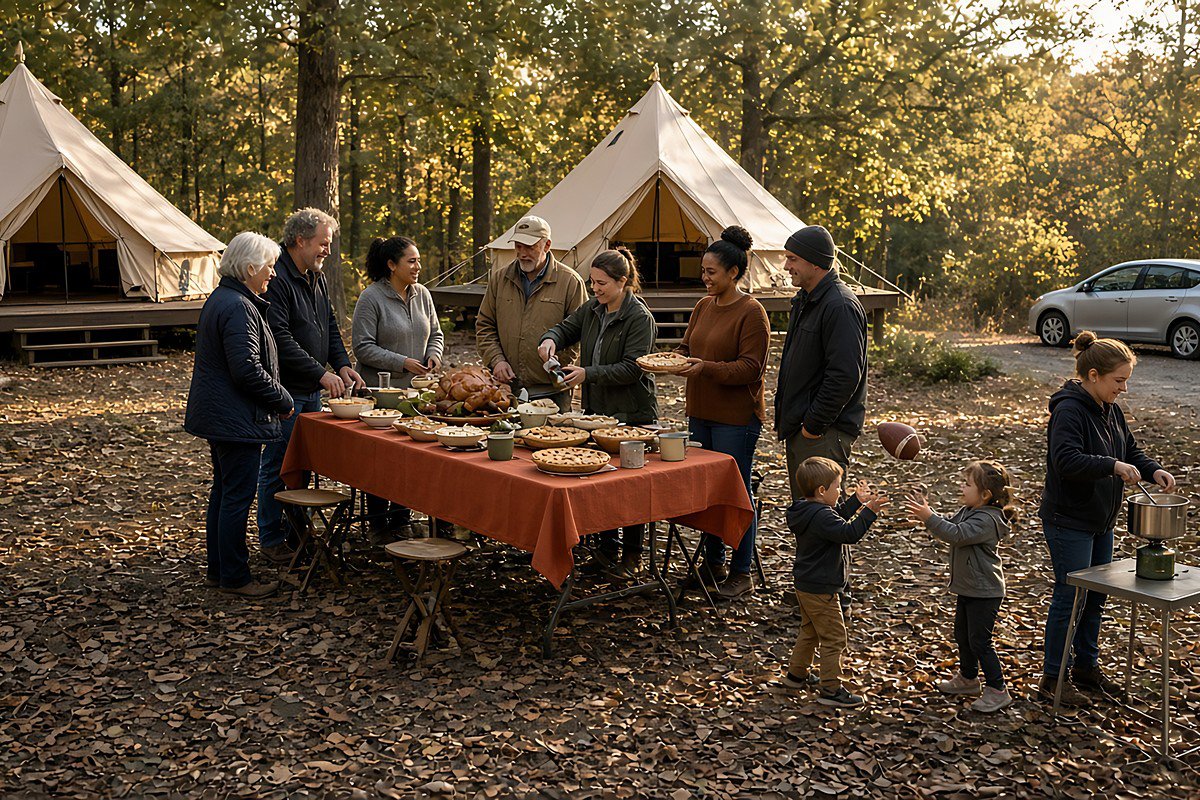
A clean, dry kit makes the next trip an easy yes. If you would rather not haul the whole setup out this winter, a cabin or glamping stay is a lighter way to get outside, and you can filter by Cabin or Glamping on OutReserve, the booking platform for the outdoors. Planning a holiday weekend? Our guide to camping over Thanksgiving covers cold nights and open dates.
Ready to plan the next trip? Search campgrounds, cabins, and RV parks on OutReserve.

Martijn Scheijbeler
Founder & CEO OutReserve